

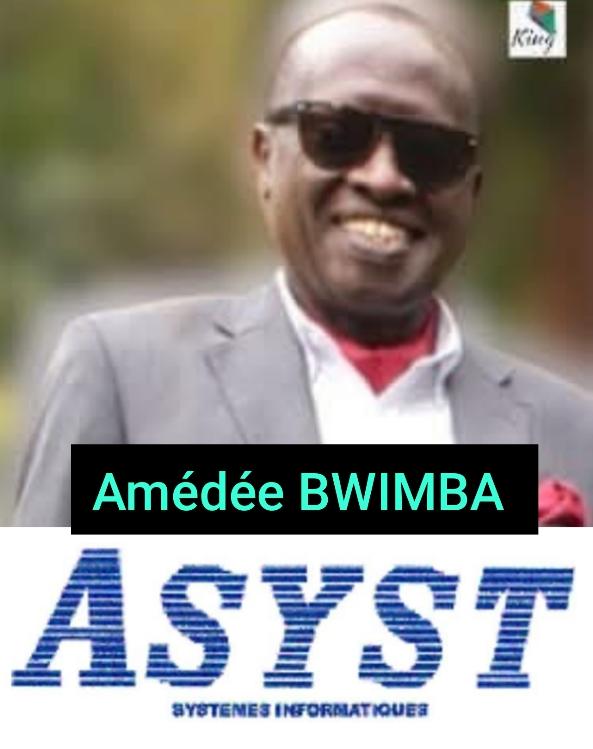
What lies behind the arrest of Amédée Bwimba
For the past three months, the head of ASYST (Advanced System) has reportedly been held in secret detention in the cells of the National Intelligence Service (SNR).
Amédée Bwimba, a Congolese national residing in Burundi, was arrested on June 16, 2023, by SNR agents. He was then taken to the service’s premises located in Bujumbura, opposite the Regina Mundi Cathedral, in the Rohero zone of Mukaza commune.
Two days after his arrest, Donatien Ndayishimiye, head of the newspaper Ikiriho—known to be close to the SNR and the CNDD-FDD party—published a message claiming that Amédée Bwimba had failed to properly carry out his duties within the Ministry of Finance.
(Read here: https://x.com/i/status/1670337142021578754)
According to several observers, this communication was intended to divert attention from the real issue.
In reality, the arrest of Amédée Bwimba is believed to be linked to sensitive issues surrounding public financial management systems. Since 2010, the Ministry of Finance has been using software known as SIGEFI (Integrated Financial Management System), developed by the company ASYST. However, the Burundian state reportedly accumulated a debt of approximately 2 billion Burundian francs to the company.
In 2023, the government initiated the implementation of the PTBA system (Annual Work Plan and Budget) as part of the program-based budgeting reform, aimed at improving transparency in public financial management, including funds handled by the Burundi Revenue Authority (OBR).
Under this framework, ASYST was expected to integrate the PTBA module into the SIGEFI system for an estimated cost of 1 billion Burundian francs. However, ASYST reportedly requested the settlement of the existing 2 billion debt before proceeding.
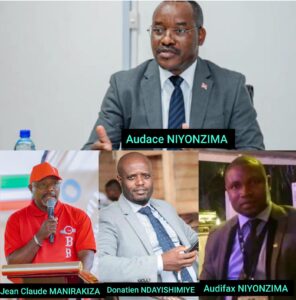
According to gathered information, this situation led to tensions with certain officials, notably the Minister of Finance, Audace Niyonzima, a former Commissioner General of the OBR. He is reportedly mentioned in a case involving the alleged embezzlement of 32 billion Burundian francs—irregularities that the new system could potentially expose.
In this context, Amédée Bwimba is believed to have been sidelined in favor of another actor. Sources indicate that Donatien Ndayishimiye is seeking to position his own company, MEDIABOX, to secure the software contract, which could explain efforts to neutralize ASYST.
According to several sources, the arrest of Amédée Bwimba may have been orchestrated under the influence of Audace Niyonzima, in collaboration with Donatien Ndayishimiye.
Other individuals mentioned in this case
The ASYST software project was initially launched as part of public sector reforms and was also intended to be operational within the Burundi Revenue Authority (OBR). However, some officials reportedly opposed its deployment, fearing it could reveal financial irregularities.
Among those mentioned is Jean-Claude Manirakiza, Commissioner General of the OBR, who is reportedly cited in cases involving suspected embezzlement of funds.
Other internal SNR sources also point to the role of Audifax Niyonzima, head of the economic department. Having previously worked in finance and public procurement services at the OBR, he may also have interests to protect in this matter.
According to these sources, the individuals involved are allegedly seeking to prevent any public disclosure of these sensitive issues.
Furthermore, some reports suggest the existence of a plan to strip Amédée Bwimba of ownership of ASYST, dismantle the company, and replace it with another firm linked to influential circles.
Call to action
In light of this concerning situation, an urgent appeal is being made.
The President of the Republic of Burundi, His Excellency Évariste Ndayishimiye, is urged to take all necessary measures to ensure the safety and life of Amédée Bwimba.
The National Independent Human Rights Commission (CNIDH), as well as the Ministry of Justice, are also called upon to urgently follow up on this case, shed full light on the matter, and ensure respect for fundamental human rights.