
Introduction: A Mining Sector at the Heart of Power Struggles
Burundi’s mining sector is currently at the center of numerous questions and controversies. While the country’s natural resources should represent public wealth capable of supporting the national economy and contributing to its development, their exploitation appears to be shaped by rivalries, political alliances, and conflicts of interest involving powerful economic actors and influential political figures.
In this context, several recent events have raised serious concerns among the public. How can it be explained that a sitting Member of Parliament had his vehicle confiscated, to the point of being forced to walk home? Who actually gave the order for this confiscation? How did the son of the Speaker of the National Assembly become a key figure in mining operations? Why were large quantities of minerals seized without any legal action being taken against those involved? And why do some mining activities continue despite the absence of official authorization?
These questions lie at the heart of an investigation conducted by King Umurundi Freedom, which we have titled “The Mineral War.” This investigation is based on various information, testimonies, and observed facts over recent years regarding the rivalries and power struggles surrounding mineral exploitation in the Kabarore region of Kayanza Province.
1. The Origin of the Conflict: Partners Turned Rivals
To understand the current situation, it is necessary to revisit a number of events that shaped the relationships between several influential actors in the mining sector.
On May 26, 2025, Vincent Ndagijimana was arrested in circumstances that quickly drew public attention. At the time, he was known for exercising significant influence in the Kayanza region, particularly in matters related to land management, property disputes, and certain controversial judicial decisions.
According to information gathered at the time, Ndagijimana was involved in a major financial dispute with two of his former associates. He claimed that they had attempted to seize approximately 50 billion Burundian francs (BIF) generated from their joint mining activities.
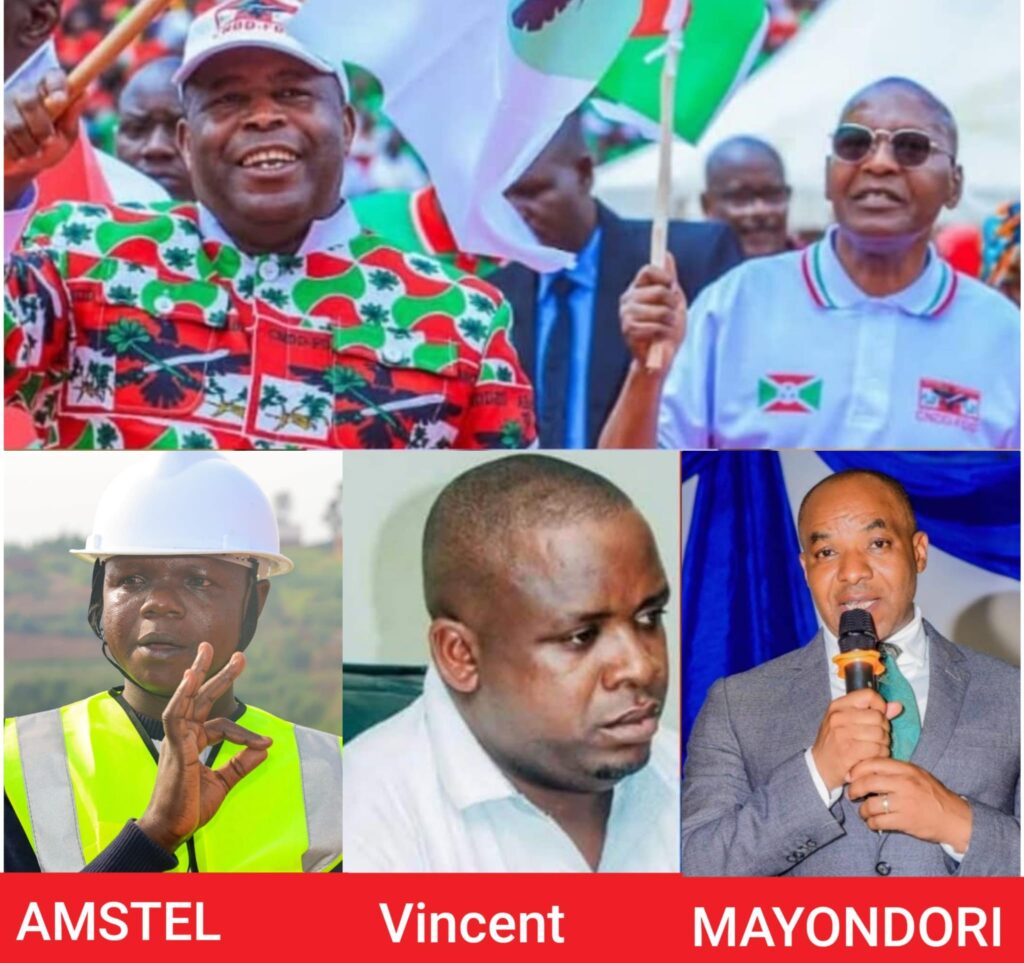
These two associates are François Uwiragiye, known as Mayondori, and Réverien Hategekimana, known as Amstel.
The three men were jointly involved in mining operations in the Kabarore commune, a region known for its rich mineral resources. Their activities were carried out primarily through the company COMEBU (Comptoir Minier des Exploitations du Burundi).
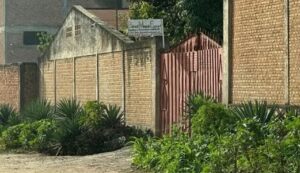
In addition to this company, they had also established another structure responsible for exporting minerals, known as BME (Burundi Mining Export), which operates a trading post located in Q10, Ngagara, Bujumbura. It is in these facilities that several tons of minerals would later be discovered and seized by authorities.
At the time of his arrest, Vincent Ndagijimana was also a candidate in the legislative elections held in June 2025. According to several sources, his former partners strongly opposed his candidacy, believing that his entry into Parliament could pose a threat to their interests.
Indeed, once elected as a Member of Parliament, Ndagijimana would have had access to a political platform that could allow him to reveal sensitive information about mining activities in the Kabarore region.
According to available information, the financial dispute between the former partners was even discussed at the office of the President of the Republic.
Ndagijimana was later released and allowed to return home, but he was excluded from the company COMEBU.
Shortly afterward, despite the tensions surrounding his situation, he was ultimately elected as a Member of Parliament.
However, his election did not resolve the conflict. On the contrary, it appears to have further intensified the rivalry between the former partners.
2. Political Alliances in the Mining Sector
To understand how these rivalries evolved, it is also necessary to examine the relationships between these mining actors and influential political figures.
Since establishing themselves in Kabarore, Amstel and Mayondori have gradually sought to build close ties with leaders of the ruling party, CNDD-FDD. Their strategy appears to have been to align themselves with political authorities in power at different periods.
During the presidency of Pierre Nkurunziza, several agreements related to mining activities were concluded across different regions of the country.
When Evariste Ndayishimiye came to power, these actors quickly moved to strengthen their relationship with him. According to some sources, they may have proposed a revenue-sharing arrangement linked to mining activities.
At the same time, President Ndayishimiye announced the suspension of several mining contracts signed under the previous administration, citing irregularities. This decision significantly altered the balance of power within the mining sector.
In this context, Amstel, Mayondori, and their associate Vincent Ndagijimana strengthened their presence in Kabarore, a region rich in minerals, particularly coltan.
According to multiple testimonies, Ndagijimana gradually built considerable influence in the region, to the point where he was seen by some residents as a key figure.
Some allegations also mention cases of land dispossession affecting local citizens, as well as interference in certain judicial decisions.
In addition, testimonies suggest that Ndagijimana maintained a network of Imbonerakure tasked with protecting his economic interests.
3. The Entry of the Speaker of the National Assembly
It is within this context that Gélase Ndabirabe was elected Speaker of the National Assembly.
Amstel and Mayondori reportedly strengthened their relationship with him, particularly because of his political influence and his origins in the Kayanza region.
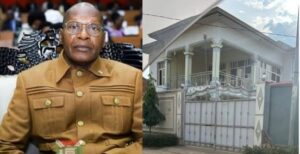
Shortly after his appointment in 2020, they are said to have offered him a house located in Q9, Ngagara, where he lived during his first term as Speaker.
More recently, he reportedly moved to Mutanga Nord, near Mont Sion, into another residence allegedly offered by MP Olivier Suguru and businessman Vénérand Kazohera as part of their business relations. These elements will be the subject of further investigations to be published.
To further consolidate this alliance, Amstel and Mayondori also sought to strengthen their ties with Jordany Ndabirabe, the Speaker’s eldest son.
He was reportedly appointed Chief Executive Officer of COMEBU, the company at the center of mining operations in Kabarore.
He continues to hold this position, which has allowed Amstel and Mayondori to reinforce their control over the mining sector.
4. The Plan to Ruin MP Vincent Ndagijimana
Following Ndagijimana’s election to Parliament, tensions between the former partners continued to escalate.
According to our findings, Amstel and Mayondori allegedly developed a strategy aimed at gradually stripping Ndagijimana of the wealth he had accumulated through mining activities.
One of the first steps in this plan reportedly involved reclaiming a Toyota VIGO double-cabin vehicle that he regularly used.
The two men claimed that the vehicle had been provided to him for professional purposes and should therefore be returned.
Ndagijimana, however, refused, stating that he had personally purchased the vehicle from Amstel as part of a private transaction.
The dispute quickly escalated into an open conflict.
Amstel and Mayondori then reportedly considered retrieving the vehicle directly at the National Assembly.
However, the matter was reviewed by the legal committee of the National Assembly, which recommended that the case be handled by the competent courts.
5. An MP Forced to Walk Home
The events reportedly took place on October 27, 2025.
On that day, Vincent Ndagijimana arrived at the National Assembly in his Toyota VIGO double-cabin vehicle.
According to our sources, Amstel sent Abel Ahishakiye, an influential member of the Imbonerakure, a former regional leader in Butanyerera, and currently employed by COMEBU, to seize the vehicle.
The legal committee of the National Assembly reportedly opposed this action, insisting that the matter should be resolved through the courts.
However, according to our sources, Speaker Gélase Ndabirabe ultimately ordered that the vehicle be taken.
The vehicle was then removed, leaving MP Vincent Ndagijimana forced to find his own way home without it.
BME Main Office NDABIRABE and his first residence in Ngagara
6. The Seizure of 100 Tons of Lithium and the Absence of Prosecution
In this section, we examine the recent seizure of minerals belonging to Amstel and Mayondori by the authorities, as well as the reasons why no sanctions have been taken against them. Another key question also arises: why do they continue to exploit minerals without official authorization?
It is important to recall that on December 3, 2022, the President of the Republic, Évariste Ndayishimiye, publicly addressed the population in Kayanza in a particularly strong speech. He sharply criticized Amstel and Mayondori, stating that the hills of Kabarore had been completely devastated by mining activities, leaving behind only pits, while the State received no tax revenue.
However, these statements were not followed by concrete action. The two men continued their mining operations, despite public expectations that firm measures would be taken by the authorities.
More recently, President Ndayishimiye announced the suspension of mining activities carried out without authorization, particularly targeting operators who had been exploiting minerals for years without declaring their revenues, resulting in no taxes reaching the State treasury.
Among the entities targeted by these declarations were COMEBU and BME (Burundi Mining Export), both linked to Amstel and Mayondori.
Shortly thereafter, the Head of State warned all individuals holding undeclared minerals to surrender them before any official intervention. He clearly stated that any minerals found outside legal channels would be considered contraband and confiscated by the State.
On October 31, 2025, the Minister in charge of the mining sector, Hassan Kibeya, also issued a warning to unauthorized mining operators and to those hiding minerals in their homes.
Despite these repeated warnings, Amstel and Mayondori have continued their mining activities to this day.
How were these tons of minerals seized?
It should be noted that Amstel and Mayondori operate a mineral trading post known as BME (Burundi Mining Export), located in Q10, Ngagara.
Intelligence services, acting under the authority of the President, eventually discovered that large quantities of minerals were being stored at this site.
The Head of State then ordered that police surveillance be established around the premises.
On November 6, 2025, security forces discovered nearly 100 tons of lithium stored at the location. All of these minerals were seized and transported by the authorities.
However, despite the scale of this seizure, no judicial action was taken against the owners of the minerals. The operation was carried out discreetly, with no official sanctions announced. Even more surprisingly, the individuals involved reportedly continued their mining activities as if nothing had happened.
A situation raising serious concerns
This situation raises numerous questions. Some observers wonder whether the President truly has the means to put an end to such practices, or whether he prefers to denounce them publicly without enforcing concrete measures.
During a conference in October 2025 on mining production, President Ndayishimiye stated that Burundi had exported minerals worth more than 6 million US dollars in just 100 days. He also revealed that some mining operators had previously claimed to earn nothing from their activities, while actual figures showed otherwise.
During this same event, he spoke critically about Amstel and Mayondori.
However, he also stated that he had ultimately decided to allow certain individuals to continue mining without official authorization, in the hope that their activities would generate revenue for the country.
He notably declared:
“Because they are Burundians, we decided to let them continue mining. If they succeed, the money will come back to Burundi.”
These statements raise significant concerns. How can the President publicly denounce individuals as responsible for the plundering of natural resources, call for the surrender of minerals to the State, and then declare that they are allowed to continue operating simply because they are Burundian?
Is this a contradiction, or a deliberate political decision regarding individuals previously described as illegal operators?
According to the information available, the President may have faced difficulties in stopping the activities of Amstel and Mayondori due to their significant influence within political circles.
This influence is reportedly linked in part to Gélase Ndabirabe, particularly given that COMEBU is currently headed by his son, Jordany Ndabirabe.
Conclusion
All these events highlight the tensions and rivalries that currently surround the exploitation of mineral resources in Burundi.
While these natural resources should represent public wealth, contribute to the national treasury, and serve as a true engine for development, their management continues to raise serious concerns regarding transparency, governance, and the balance of power.
In light of this worrying situation, our organization calls for:
Greater transparency in the management of the mining sector, so that the country’s natural resources truly benefit the entire Burundian population.
The establishment of independent audits and the regular publication of mining revenues, ensuring that these resources effectively contribute to the national treasury and national development.
Respect for the independence of the judiciary, as well as an end to the control of the mining sector by a small circle of vested interests.