
As Parliament reviews a cooperation agreement with the Kingdom of Morocco, serious questions are being raised about the real benefits Burundi could derive from it, in a context marked by weak export capacity and a lack of investment.
Unbalanced Trade Relations Under Scrutiny
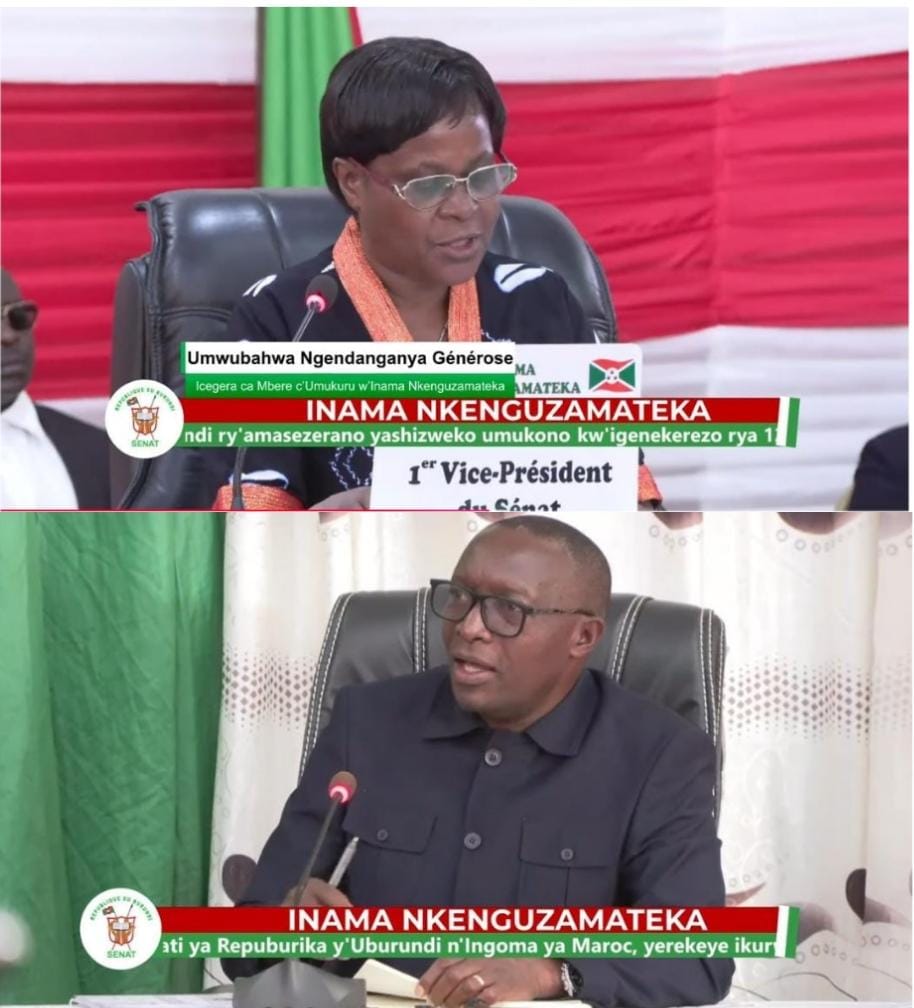
The issue of Burundi’s external economic relations has taken center stage in Senate debates. On Tuesday, January 13, 2026, the Minister of Foreign Affairs and International Cooperation, Édouard Bizimana, appeared before senators during the presentation of a draft law concerning the cooperation agreement between Burundi and the Kingdom of Morocco.
During the session, the First Vice-President of the National Assembly, Générose Ngendanganya, voiced strong reservations. She highlighted the complete absence of Burundian exports to Morocco, denouncing a partnership that, in her view, mainly benefits imports and leads to a continuous outflow of foreign currency.
“The table presented shows what Morocco exports to Burundi, but it does not show what Burundi exports,” she noted, arguing that such a situation prevents the country from gaining any concrete economic advantage from the cooperation. She also questioned whether the government has a clear strategy to identify and promote Burundian products for export.
Foreign Investment: Opportunity or Risk?
The issue of investment also sparked heated exchanges. Générose Ngendanganya expressed concern over a potential imbalance between Moroccan and Burundian investors, given the far more limited financial capacity of the latter. She warned that without mechanisms to protect and promote local entrepreneurship, Burundi risks reducing its youth to mere executors rather than creators of economic value.
She cautioned that young Burundians could end up working for foreign investors—gaining employment but lacking real opportunities to develop innovative or structurally transformative projects for the national economy. The Vice-President of the National Assembly also raised concerns about Burundians who studied in Morocco, questioning why some are arrested upon returning home and whether they should instead be encouraged to become investors capable of producing abroad and exporting to Burundi.
Government Response and Ongoing Criticism.
In response, Minister Édouard Bizimana acknowledged that Burundi currently exports no products to Morocco. However, he stated that the country has significant potential, citing fruits and minerals as possible export commodities. He urged Burundian investors to seize the opportunities offered by access to the Moroccan market.
In its analysis, King Umurundi Freedom Organization believes these debates reveal a deeper malaise related to the economic management of the country under the CNDD-FDD regime. The organization points to the absence of strong Burundian investors and notes that many foreign investors are reluctant to engage in Burundi, citing poor governance, legal insecurity, and cases of persecution or expropriation of property.
In light of these criticisms, the cooperation agreement with Morocco appears less as an obvious economic opportunity and more as a reflection of the structural challenges facing Burundi’s economy.
The program is available on our YouTube channel: https://youtu.be/6EFTFriKEUg